 Option Wheel Start
Strategy basics
How the Option Wheel Strategy Works
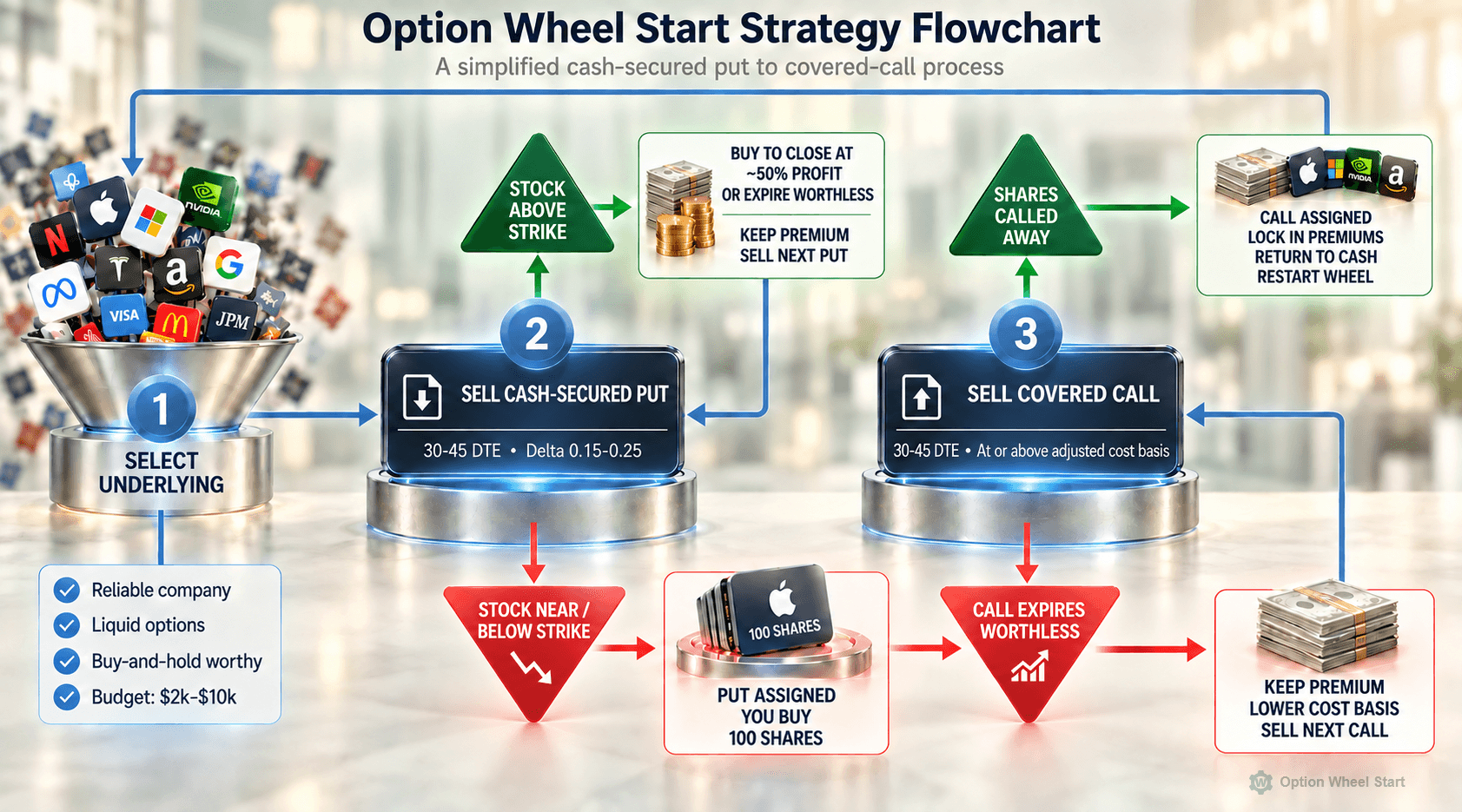
The Option Wheel Strategy is a slower-paced way to trade options that aims to generate recurring cash flow. Each trade is backed by cash or shares you already own. This can reduce some risks, but it does not make the strategy low risk: a sharp decline in the stock can still cause a substantial loss.
The strategy is a three-step, repeating cycle built around selling cash-secured puts and covered calls.
Stock selection comes first. See how to choose stocks for the Wheel strategy.
Step 1: Sell a cash-secured put
- Choose a stock or ETF you would be comfortable owning.
- Sell a put option and receive a cash payment called a premium.
- Choose your pace: For a more peaceful approach, use 30–45 days to expiration (DTE) and a delta of 0.15–0.25. To be more aggressive and pursue more potential gains, use 7–14 DTE and a delta of 0.20–0.30. The aggressive range requires closer monitoring and carries a higher risk of assignment.
- Keep enough cash available to buy 100 shares at the strike price if you are assigned.
- If you are not assigned: You do not buy the shares. Keep the premium and decide whether to sell another put.
- If you are assigned: You must buy 100 shares at the agreed price, called the strike price. Then move to Step 2.
Step 2: Sell a covered call
- Sell a covered call, which is a call option backed by the 100 shares you now own.
- Choose your pace: For a more peaceful approach, use 30–45 DTE and choose a strike at or above your adjusted cost basis. To be more aggressive, use 7–14 DTE and be prepared to monitor the position more closely.
- Receive another premium.
- If you are not assigned: Keep the shares and the premium, then decide whether to sell another covered call.
- If you are assigned: Your shares are sold at the agreed strike price. This is also called being “called away.” Then move to Step 3.
Step 3: Repeat the Wheel
- After the shares are sold, your account holds cash again.
- Review the stock, the risks, and how much cash you have available. If the trade still fits your plan, return to Step 1.
Strategy basics
Cash-secured puts
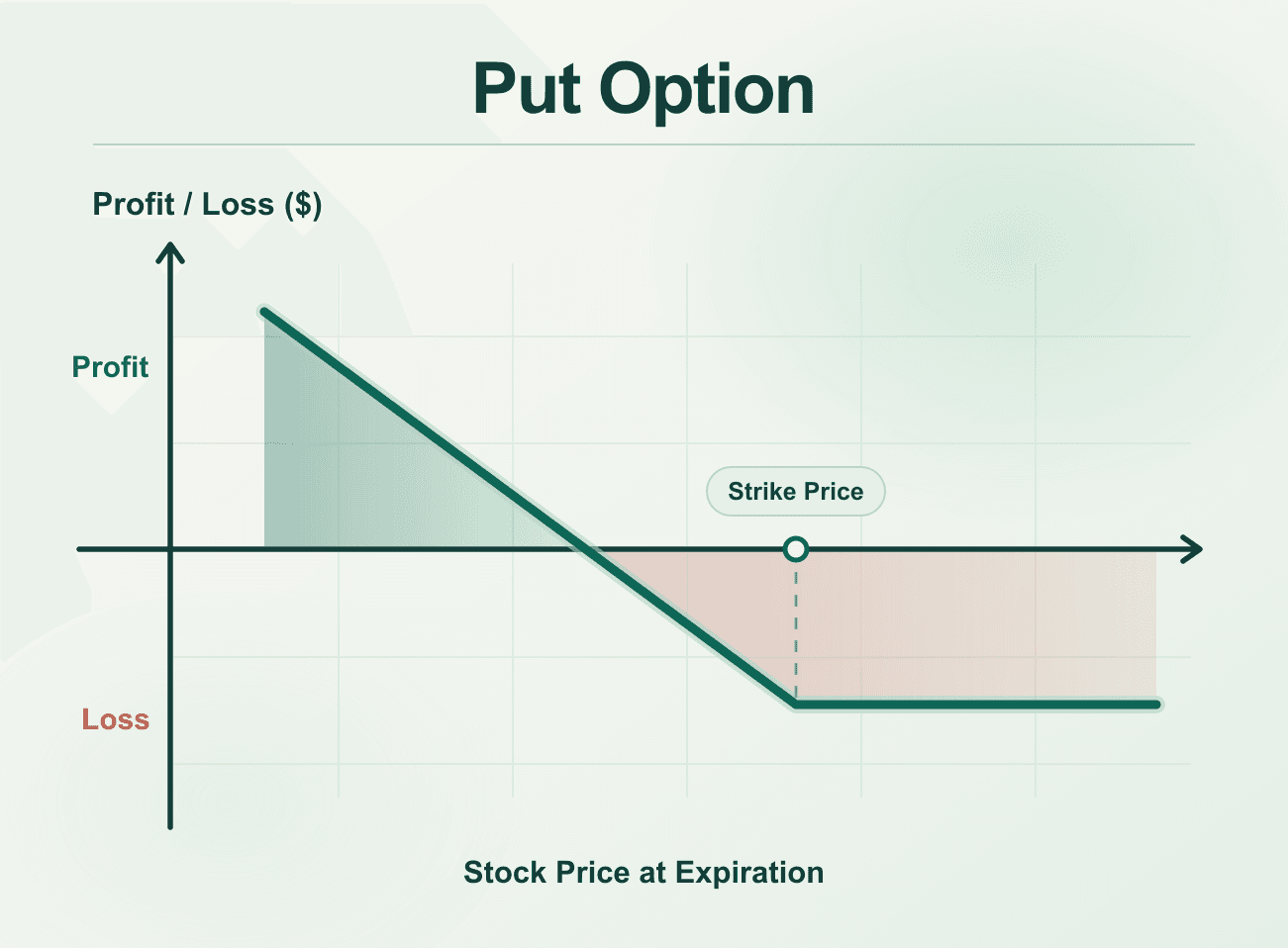
A cash-secured put is a short put option paired with enough cash to buy the shares if assignment occurs. By selling the put, the writer accepts the obligation to purchase the underlying shares at the strike price if the option holder exercises. For a standard equity contract, that normally means setting aside strike price × 100, plus any broker-required amounts, fees, or taxes that may apply.
The premium received lowers the effective share cost if assignment happens, before costs and taxes. But it only provides a limited buffer: a company can fall far below the strike, leaving the investor with a substantial loss on the shares. If the stock rises instead, the put may expire unassigned and the investor may miss the opportunity to buy shares at the earlier price.
Assignment is possible before expiration for American-style options. Check the contract style, your broker's exercise and assignment procedures, and the cash requirements before entering an order.
Learn more: Options Industry Council: Cash-Secured Put and FINRA: Trading Options—Understanding Assignment.
Strategy basics
Covered calls
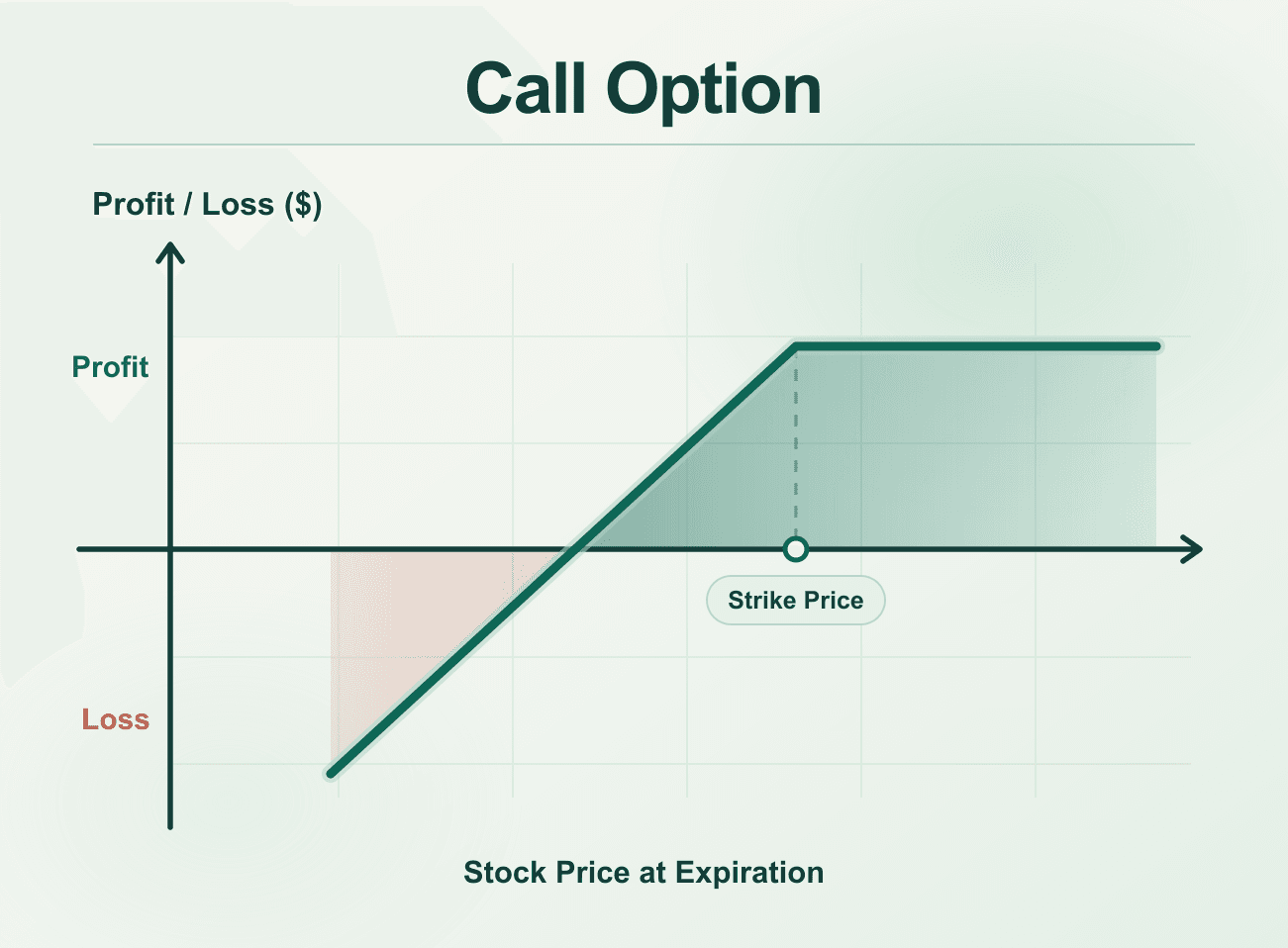
A covered call means selling a call option while already owning the matching number of shares. The premium is received upfront, but the call writer is obligated to sell the shares at the strike price if assigned. In a Wheel cycle, this step is used only after put assignment has resulted in stock ownership.
The trade-off is clear: the premium can provide a modest offset if the stock declines, but it does not eliminate the downside of owning the shares. If the stock climbs above the call's strike, the investor gives up gains above that price and the shares may be called away. Selling the shares while the short call remains open can leave the call uncovered and materially change the risk.
A short call can be assigned before expiration for American-style options, including in circumstances around an ex-dividend date. Investors should be willing to sell the shares at the strike and monitor the position according to their own broker's procedures.
Learn more: Options Industry Council: Covered Call (Buy/Write) and FINRA: Options—The Basics and the Greeks.
Education
Further reading
Start with the official risk disclosures and regulator guidance. The explanatory articles below can help with terminology, but they are not a substitute for your broker's options agreement, contract specifications, or professional advice.
U.S. options and investor protection
- OCC: Characteristics and Risks of Standardized OptionsOfficial options-risk disclosure document.
- Options Industry Council (OIC)Free education from OCC's industry education program.
- FINRA: Options—The Basics and the GreeksGlossary and investor-focused overview of options risks.
- U.S. SEC: Opening an Options AccountWhat a U.S. broker typically considers before granting options approval.
Canadian regulatory context
- Canadian Investment Regulatory Organization (CIRO)Canada's self-regulatory organization for investment dealers and trading activity.
- CIRO: Guidance for order-execution-only accountsExplains the limits on recommendations from self-directed brokers.
- Financial Consumer Agency of Canada: Savings and investmentsFederal starting point for general Canadian investing information.
Independent explainers and reference articles
- Wikipedia: Option (finance)Broad, linked overview of options terminology and history.
- Wikipedia: Covered optionBackground on covered calls and related concepts.
- Investopedia: Covered Calls in InvestingPlain-language explanation of mechanics, trade-offs, and examples.
- Investopedia: Put OptionIntroductory reference for puts, strikes, and exercise.